Portable toilets collect waste for later removal. The way the toilet bowl and flushing system work varies between models, so words such as “chemical”, “flushing” and “VIP” need a little explanation when you compare equipment.
The systems below are general equipment examples. Confirm the actual specification of the unit offered for your hire.
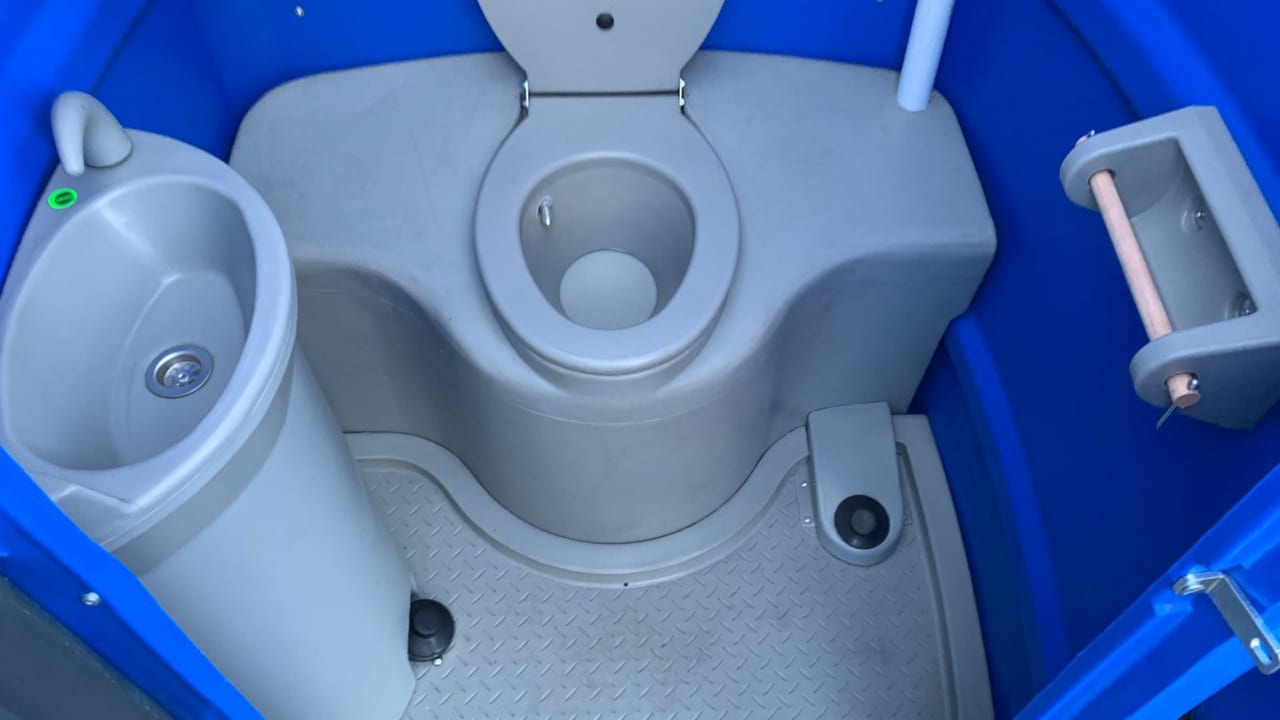
A holding tank stores the waste
A self-contained portable unit uses a holding tank rather than relying on a conventional sewer connection. The operator prepares and services the tank according to the equipment instructions and service arrangement.
Deodorising products may be used as part of that preparation. They do not remove the need to empty the tank, and treated waste should not be assumed safe to discharge onto the ground or into a stormwater system. Leave tank preparation and waste removal to the operator.
Static and recirculating systems differ
In a static arrangement, waste enters the holding tank without a conventional fresh-water flush. A recirculating system uses liquid from its tank through a purpose-designed flushing mechanism.
PolyJohn describes both holding tanks and recirculating flush tanks, including recirculating models operated by a foot pump or hand lever. This illustrates why a foot control alone does not tell you where the flushing liquid comes from.
Fresh-flush arrangements use a separate fresh-water supply for flushing. The manufacturer’s instructions distinguish the available configurations. Ask the supplier which arrangement applies to the proposed unit and what water provision it needs.
Compare the questions, not just the label
| Description | What to confirm |
|---|---|
| Static portable toilet | Holding tank arrangement and what the user sees |
| Recirculating flush toilet | Pump operation, flushing arrangement and servicing |
| Fresh-flush toilet | Fresh-water supply, waste storage and refill arrangements |
| Toilet trailer | Actual toilets, water and power needs, waste arrangements and access |
“VIP” describes a positioning or level of finish in many hire catalogues. It does not, by itself, specify the plumbing, tank size, accessibility features or utility connections. Request those details separately.
Handwashing is a separate question
Some units include a small basin; other arrangements use a freestanding handwashing station. Check the actual portable toilet and handwashing equipment and ask what is supplied with it.
Confirm water, soap, drying and wastewater arrangements. Someone also needs to check that the facilities remain stocked and operational during use. A flushing toilet and a handwashing facility can have different water systems, even within the same installation.
Servicing keeps the arrangement usable
Tank capacity, use and the agreed service plan affect when a unit needs attention. Routine checks during the day and technical servicing are different responsibilities. Use the cleaning and servicing guide to agree who does each task.
Before booking, ask for a clear description of the supplied model, included consumables, service scope, site requirements and collection arrangements. Those answers are more useful than a product name alone.
Sources and further reading
Primary sources used for the factual references in this guide. Site conditions, contract documents and applicable local requirements still need to be checked for your project.
- PolyJohn: Holding tanks and recirculating flush tanks
- PolyJohn: Comfort XLT flushing product instructions
- PolyJohn: Static portable restroom instructions
Published by Titan Toilet Hire.