Include handwashing when you plan temporary toilets. A usable station needs water, soap, a suitable drying arrangement and someone responsible for replenishment. Its location and operation need to work for the people using it.
The WHO’s 2025 community hand hygiene guidance covers public and institutional settings as well as homes. It supports handwashing with plain soap and water at key times, including after toilet use. These public-health recommendations should be distinguished from the local requirements and approval conditions for a particular site or event.
Confirm the complete setup
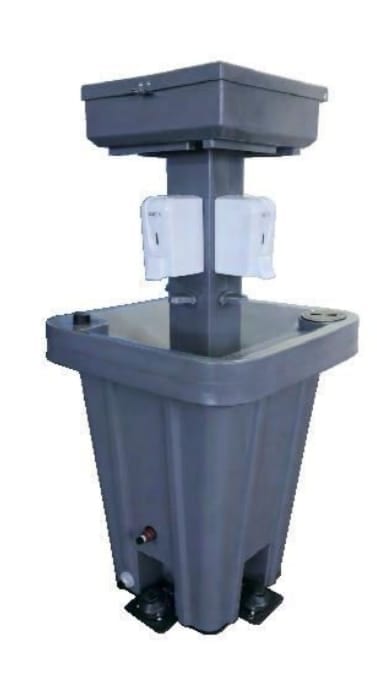
Ask whether the selected toilet has an internal basin or whether you need a separate handwashing station. Check how it operates and what is included in the supply.
Record the water source, soap provision, drying arrangement and wastewater collection or disposal arrangement. Confirm who installs or prepares the equipment and how the site team can recognise that it needs attention.
Keep drinking-water provision as a separate planning item. The presence of a handwashing container does not establish that drinking water is available.
Choose a position people can use
Walk the route from the toilets to the handwashing point. Check for obstacles, soft ground, steps, poor lighting and queues that could block the basin. Make the location clear with suitable signs.
Consider the controls as well as the route. A foot pump, tap or dispenser needs to be usable by the intended users. Include handwashing in your accessible sanitation walkthrough.
Assign checks throughout the opening period
Choose who checks the station and who has replacement supplies. Cover busy periods, evening use and shift changes. Make the handover clear so responsibility does not disappear when one team leaves.
A useful check records whether water flows, soap is available, the drying arrangement works, the surrounding area is usable and wastewater is being managed as agreed. Report leaks, blocked operation or a failed pump through the equipment operator’s contact arrangement.
Make a replenishment plan
| Item | Question to resolve |
|---|---|
| Water | Where is the approved refill supply and who handles it? |
| Soap | Who holds replacement stock and checks dispensers? |
| Drying | What is provided and how is it replenished? |
| Wastewater | Where is it collected and who manages removal? |
| Faults | Who is contacted and what alternative is available? |
| Opening hours | Which person covers each period? |
Keep spare supplies accessible to the people assigned to use them. Review consumption after opening and adjust checks if demand is higher than expected.
Understand the role of hand rub
WHO describes alcohol-based hand rub containing at least 60% alcohol as an alternative when hands are not visibly dirty. It should not be used as a reason to leave the site’s handwashing plan unresolved. Check the arrangements needed for your activities, users and applicable local requirements.
Before the event or shift begins, test the actual setup rather than relying only on a delivery checklist. Repeat the check after refills, equipment moves or changes in the layout.
Sources and further reading
Primary sources used for the factual references in this guide. Site conditions, contract documents and applicable local requirements still need to be checked for your project.
- WHO: Guidelines on hand hygiene in community settings, 15 October 2025
- WHO: Community hand hygiene guidance announcement
Published by Titan Toilet Hire.